
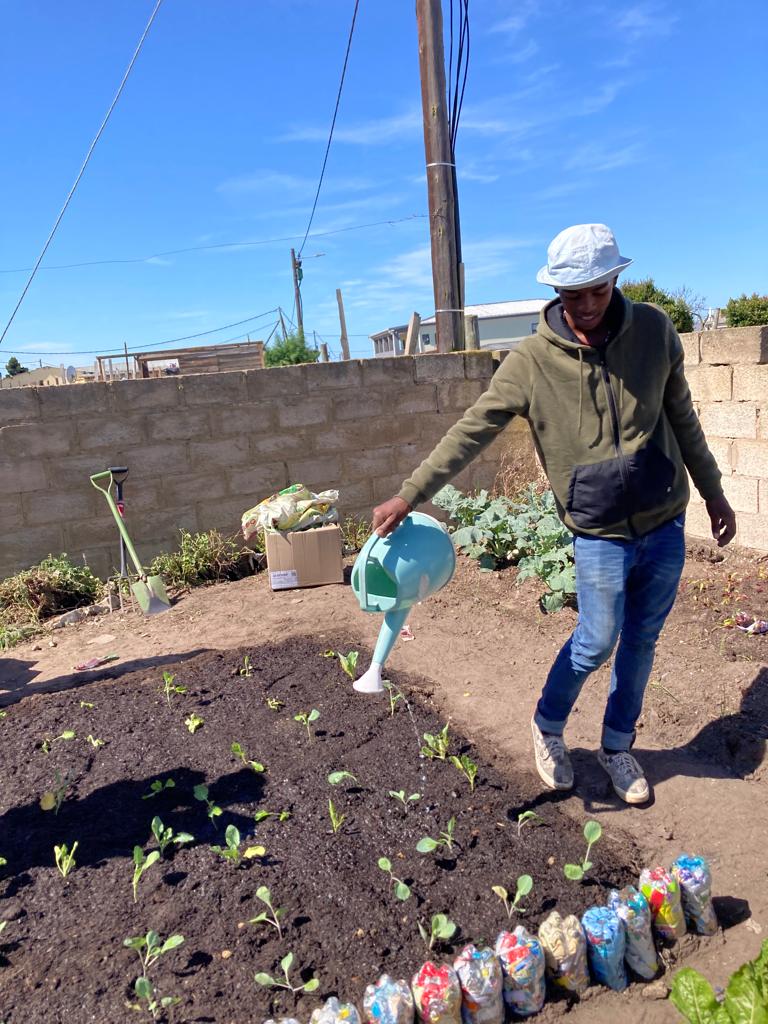
Food gardens are being developed in our communities with several goals in mind:
- Improve access to nutritious food for households
- Increased physical activity and improved mental health
- To teach essential life skills to adults and children
- Promote social interaction and empower residents
- To beautify and bring God’s creation back to our communities
- Sale of vegetables and seedlings can create income for households
Good nutrition forms the foundation of a child’s survival, health and development because well-nourished children are better able to grow and learn. Adults learn to participate and contribute to their communities by upgrading their own properties which makes them proud and gives them a purpose as residents. Rubbish dumps, wasted space and properties filled with trash can be transformed into gardens filled with food, fruit trees, indigenous plants, nature, birdlife and safe areas for children to play in. They can also learn about God’s creation and their role as stewards of all that He has created for them to enjoy and care for on earth.
We commenced with Phase 1 of our project in March 2021, and this was to establish compost heaps to produce our own composting soil for the food gardens. Children learnt to build compost heaps and actively contributed to this project. This required the collection of vegetable waste, egg boxes, egg shells, newspaper, dried leaves, sticks, straw and manure. This was very positive life skill training as they had no idea how much could be recycled to produce good healthy soil. This took 6 months!
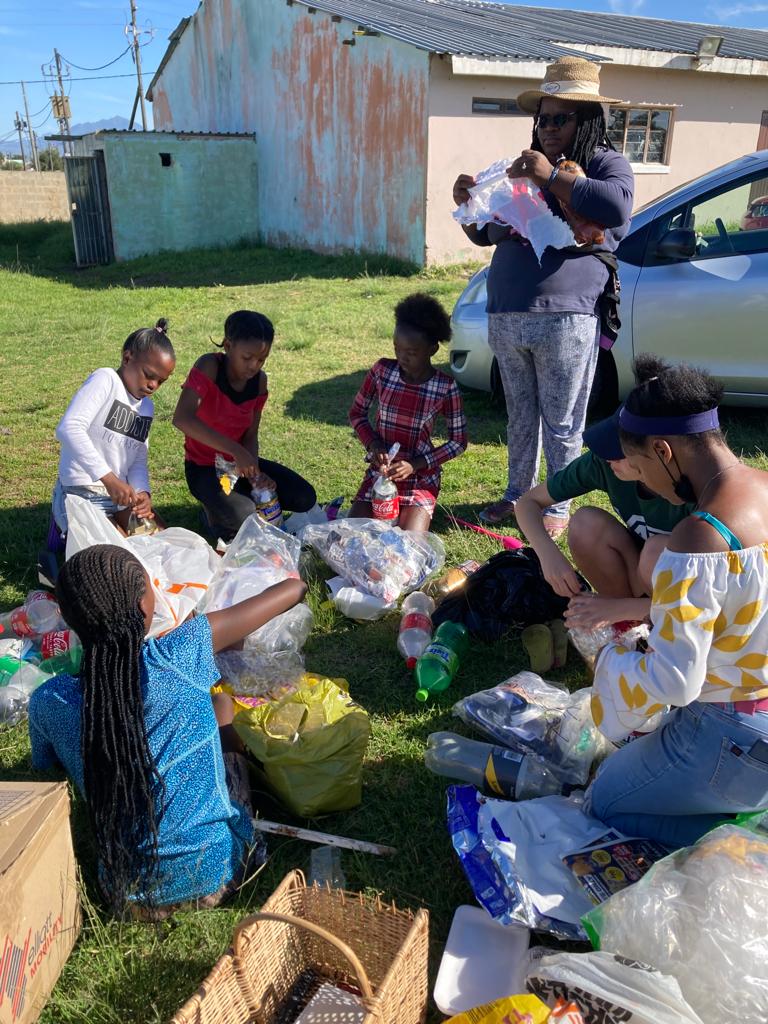
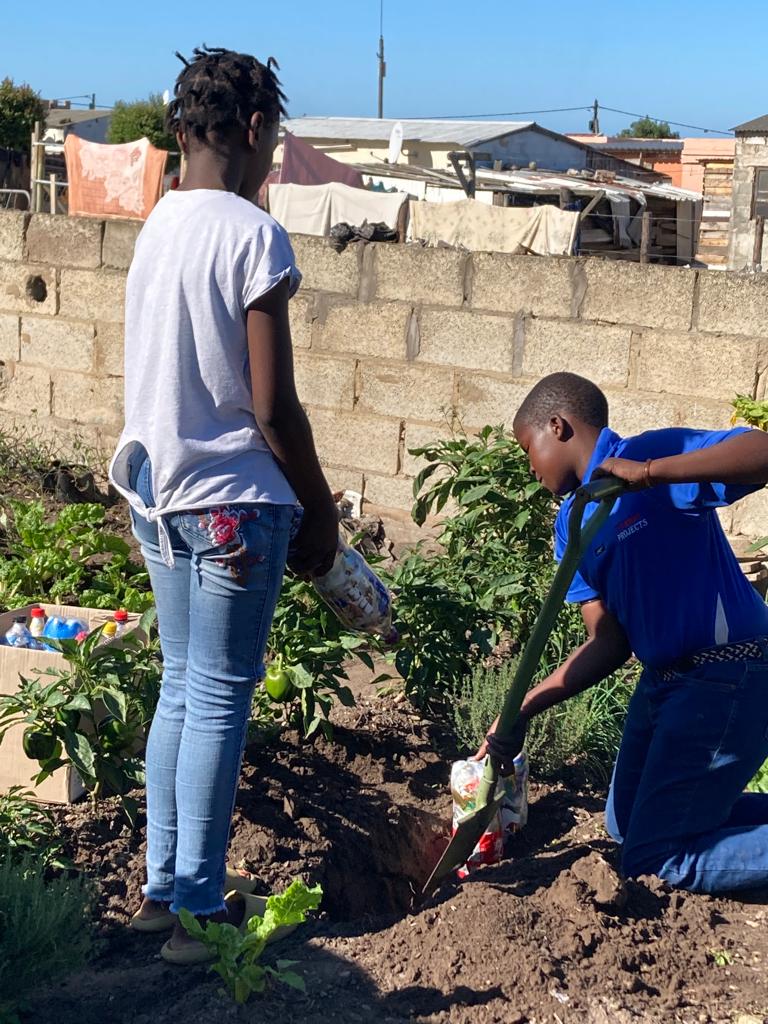
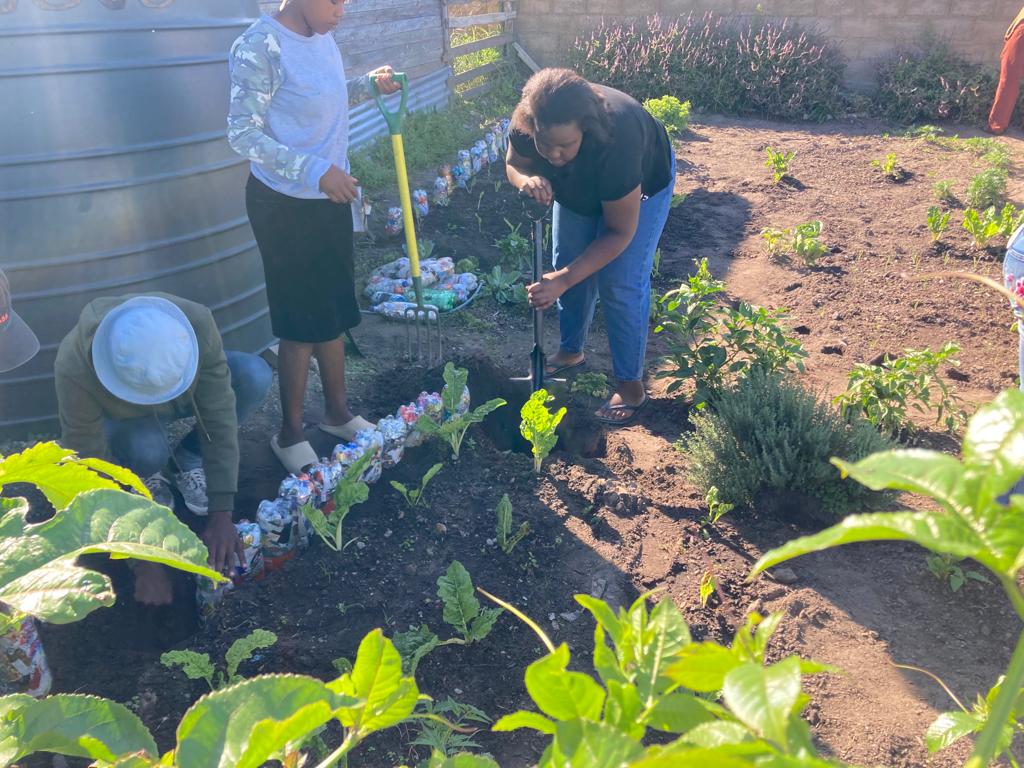
In Springtime, August 2021, we began with Phase 2 of our project: planting seedlings, laying out garden beds, and using recycled plastic in the form of ecobricks to build the walls (Ecobricks are 2 litre plastic soda bottles stuffed with washed soft plastic that we are recycling, e.g. chips packets). We layered the beds, starting with newspapers, egg boxes, compost and wood chips before planting our first seedlings.
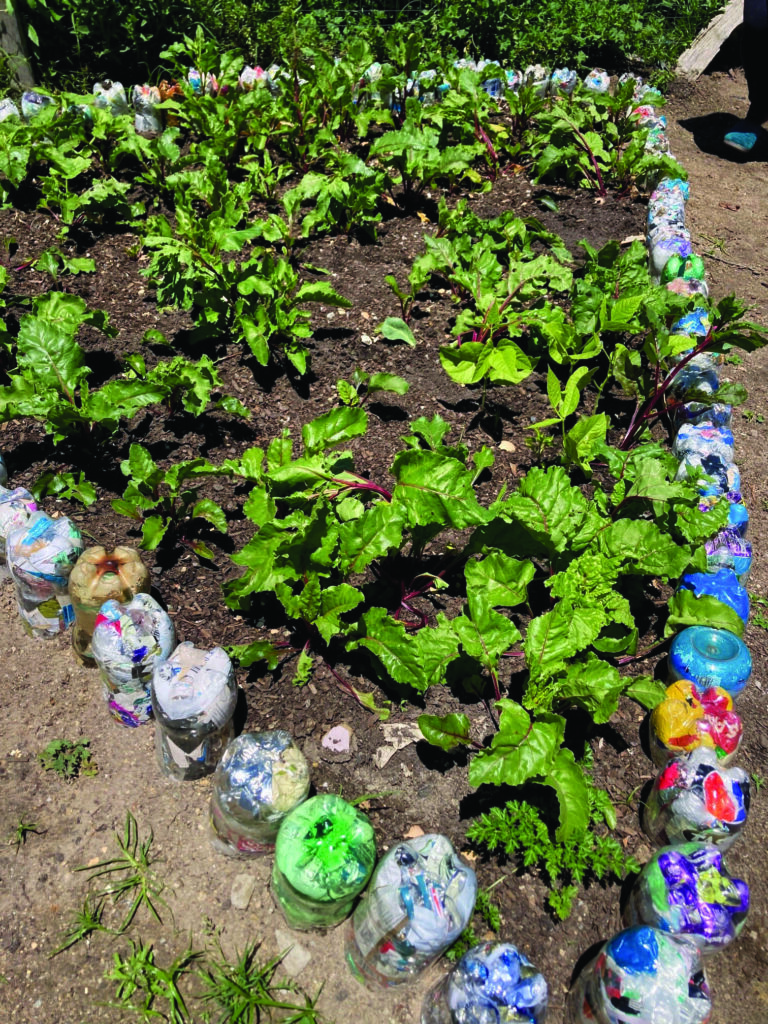
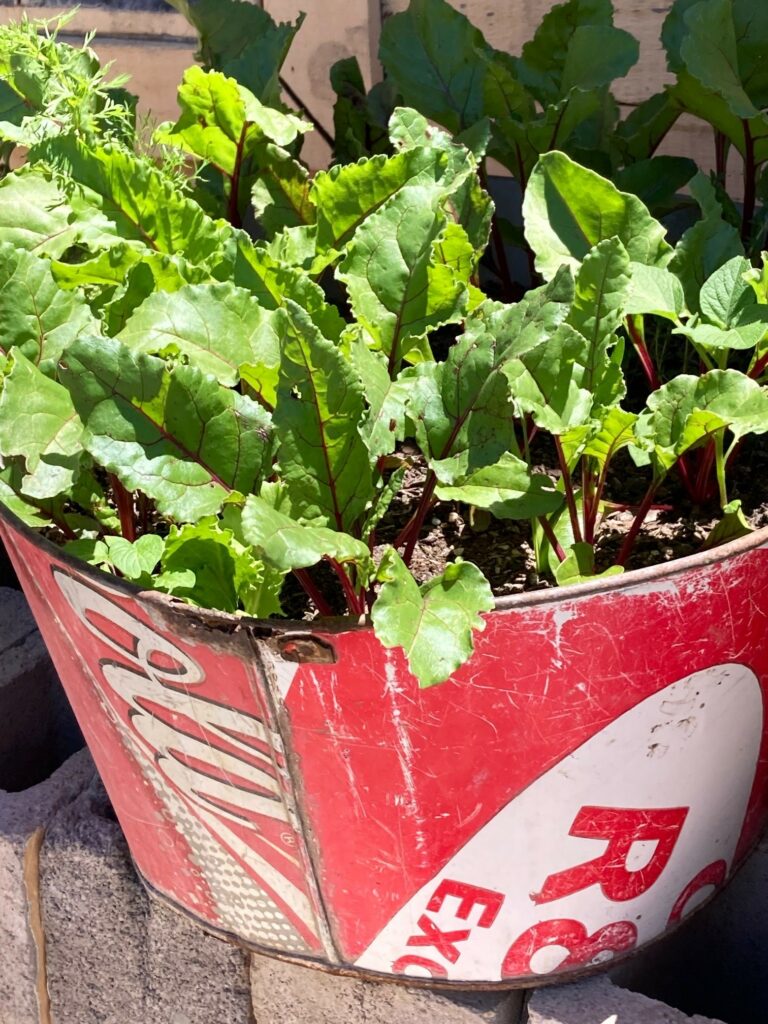
Children collected broken containers and built mini food gardens at 8 of the homes on our street and within 2 months they were enjoying the fruit of their labours – picking spinach, beetroot, tomatoes, herbs and more for their families to enjoy. Granadilla vines have been planted against fences, as well as lemon trees. A local church and our Field Director’s home property have become pilots for our food garden project where we teach and train our community members. In one month, one household sold R590 worth of vegetables and seedlings to neighbours, revealing how this could become an income generating business for households.
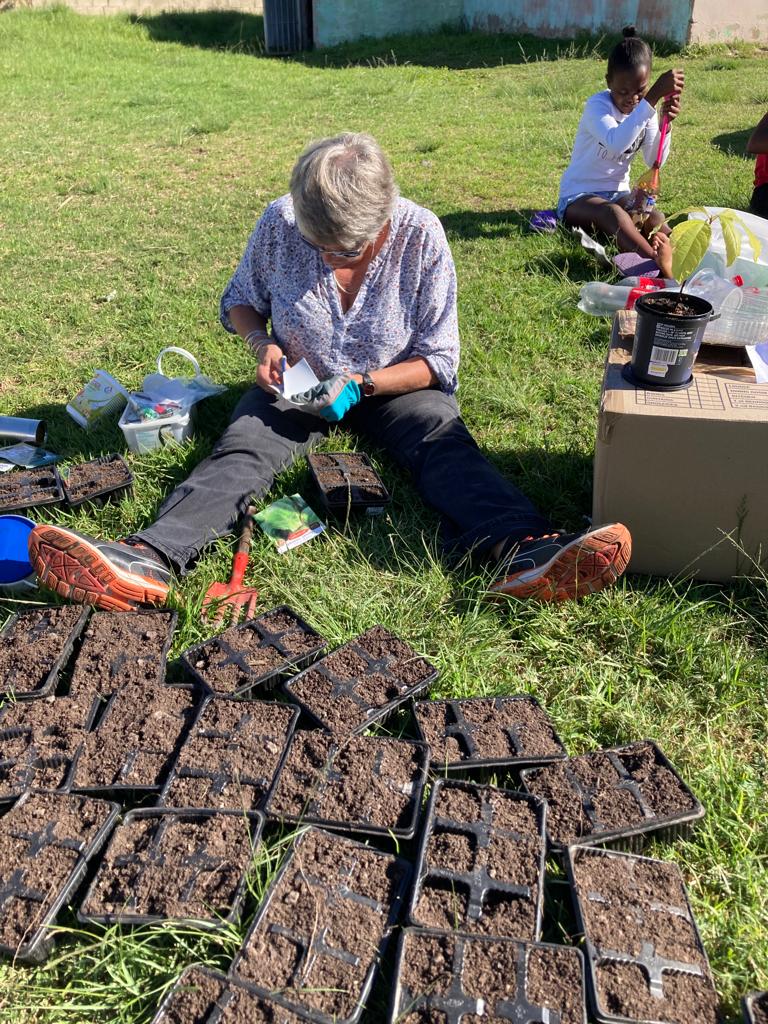
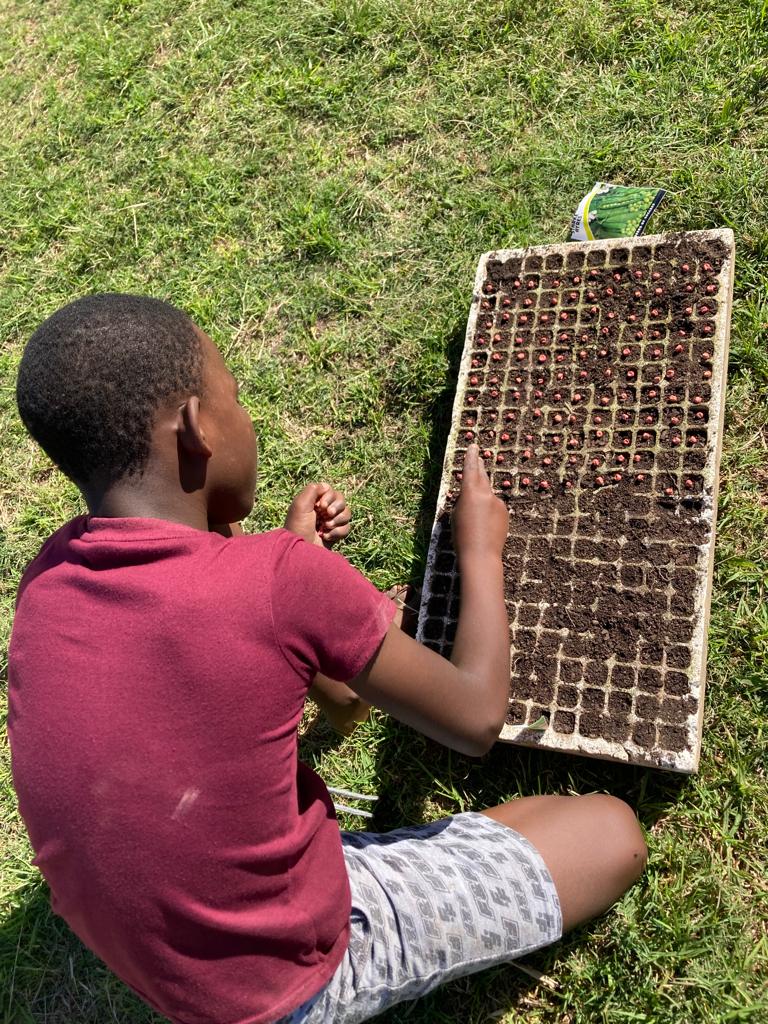
It is March 2022 and we are preparing bigger areas for planting, planting hundreds of seeds for seedlings and expanding our project by educating the families and teaching them the value of healthy eating and living sustainably as community members. We will post regular updates in our Quarterly Newsletters.

0 Comments